
AI-CCORE Blogs
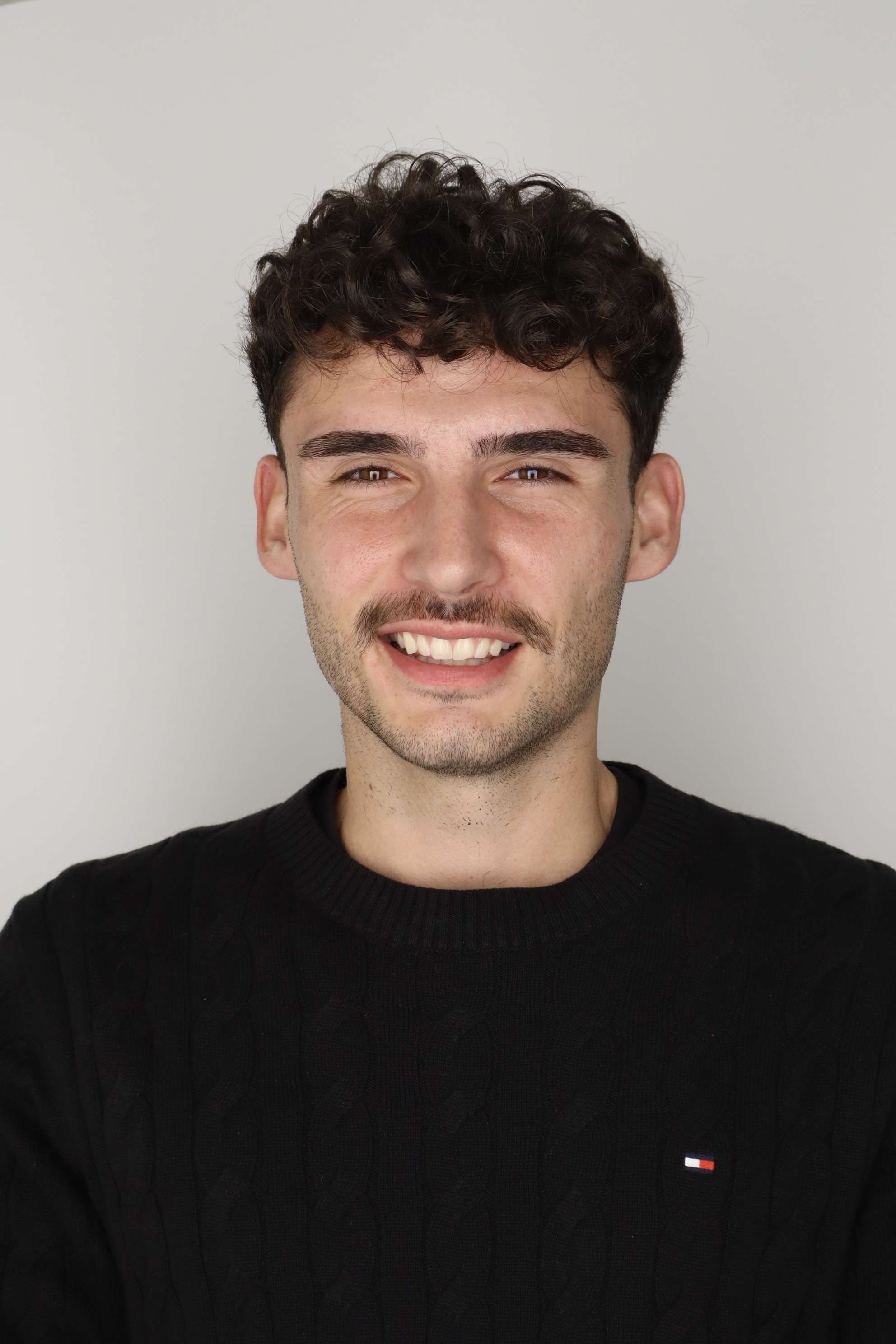
UNO’s Victor Winter joins Insurtech on the Silicon Prairie panel on AI adoption
Victor Winter, Ph.D., of UNO and AI-CCORE joined leaders from Gallup, Nationwide, and Federato in Omaha to discuss the human side of AI adoption in insurance.
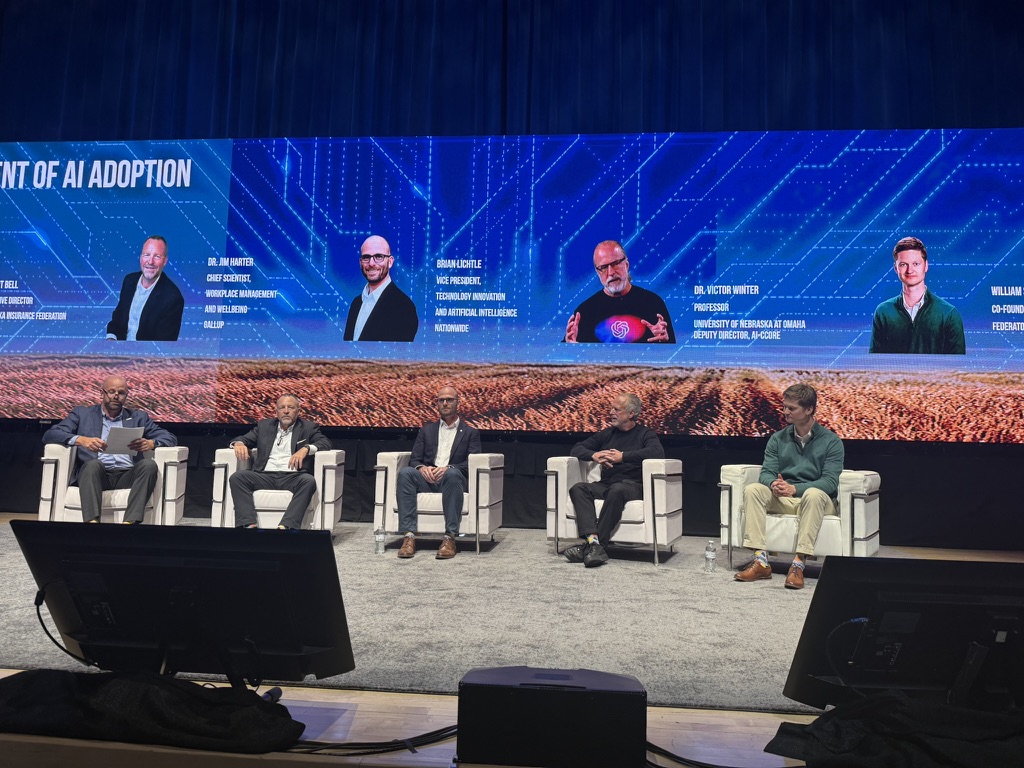
On Oct. 20, the stage at Omaha’s Holland Performing Arts Center hosted a full day of sessions on how artificial intelligence is changing the insurance business. Insurtech on the Silicon Prairie, an annual national conference co-hosted by the Nebraska Department of Insurance and the Nebraska Insurance Federation, brought carrier executives, technology companies, startups, and state insurance regulators into a single program. Among the speakers was Victor Winter, Ph.D., professor of computer science at the University of Nebraska at Omaha (UNO) and deputy director of the university’s Artificial Intelligence Center for Collaborative Outreach, Research, and Education (AI-CCORE). He joined an afternoon panel on the human side of AI adoption.

One stage, many parts of the industry
The conference runs as a single-stage event, so sessions follow one another rather than splitting into parallel tracks. The 2026 agenda showed how far AI now reaches into insurance. Morning sessions included a conversation with Jon Farney, president and chief executive officer of State Farm, and a panel on autonomous AI agents in carrier operations with leaders from Allstate, Verisk, and Mutual of Omaha. They also included a fireside chat on technology modernization with Bill Pappas of MetLife and a talk on AI in business and insurance by Kevin Alwell, who leads AI deployment engineering for financial services at OpenAI.
Afternoon sessions featured Michael Ram, head of insurance at Anthropic, on steps insurers can take now. They also included a talk from Upstage AI on the return on AI investment and a panel on agentic commerce, in which AI agents help consumers shop for coverage.
Regulators had a session of their own. Insurance commissioners and superintendents from California, Texas, Florida, North Dakota, and Rhode Island joined Jeff Johnston, chief executive officer of the National Association of Insurance Commissioners (NAIC), to discuss regulatory considerations in AI and insurtech. Nebraska Department of Insurance Director Eric Dunning moderated. According to the department, Nebraska is home to more than 155 domestic insurers. For Nebraska, questions about how insurers adopt AI are close to home.
The human element of AI adoption
At 1 P.M., Robert Bell, executive director of the Nebraska Insurance Federation, moderated “The Human Element of AI Adoption.” Alongside Winter, the panel included Jim Harter, Ph.D., chief scientist for workplace management and wellbeing at Gallup; Brian Lichtle, vice president of technology innovation and artificial intelligence at Nationwide; and William Steenbergen, co-founder and chief technology officer of Federato.
Each panelist came to adoption from a different direction: workplace research, a national insurer’s technology strategy, an insurance software company, and university computer science. Whether a new tool changes how an organization works depends on more than the tool. It also depends on the skills of the people using it, the processes around them, and the judgment they bring to decisions. Those four vantage points brought each of those factors into the conversation.

Working across specializations
In one segment of his remarks, recorded by an AI-CCORE attendee, Winter offered a historical frame. Before industrialization, he noted, a master craftsman could build a complex product from start to finish. Industrialization broke that work into simpler tasks, each assigned to a worker, a principle he described as enormously successful and still basic to the economy today. It also confined people to narrow specializations. AI, he argued, makes it possible to rethink those boundaries. He gave an example from his own work: for years, he has wanted to combine the substance of a university course with the production skills of Hollywood and the immersive experiences of game studios. That combination once lay beyond what one professor could build alone. With AI, he has taken up the goal again, working with AI in roles from screenwriter and artist to software developer and producer. Along the way, he has been learning to collaborate effectively with capabilities beyond his own expertise. The question his example raises is what happens when individuals can reach across specializations.

Where research and practice meet
Insurance is a field built on specialized roles, from underwriting and claims to actuarial analysis and compliance. If AI makes it easier for people to contribute across those lines, organizations will face practical questions: how roles are defined, how staff are trained, and where human judgment must remain in the loop.
Those questions extend to classrooms as well. Students preparing for careers in insurance, technology, or almost any profession may need depth in one discipline along with the ability to work well beyond it, including alongside AI systems whose strengths differ from their own. That intersection of education, applied research, and workforce development is the focus of AI-CCORE, which UNO introduced in 2025 to connect AI training and research with businesses and communities across Nebraska.
No single panel settles how AI will change work. Across the day’s program, from the regulators’ session to the afternoon discussion of human factors, the people working on that question shared one stage: researchers who study how work changes, companies deploying the tools, and the officials who oversee them.